Quick Summary
To get food truck permits, first register your business and obtain an EIN, then confirm which federal, state, county, and city agencies have jurisdiction where you plan to operate. Submit your health department plan review before building the truck, then apply for vehicle inspection, vendor, and business licenses. Permits do not carry across jurisdictions, so verify each one directly with the agency.
- Permits stack across federal, state, county, and city layers, each with its own application and renewal.
- Submit the health department plan review before building or modifying the truck.
- Keep a spreadsheet tracking agency, permit name, portal, documents, and renewal cycle for each jurisdiction.
- Missing commissary agreements, insurance certificates, or vehicle registration are the most common cause of rejection.
- A passed health inspection does not replace a city vendor permit, so apply for both in parallel.
Table of Contents
- Start With Your Local Requirements
- Gather Your Food Truck Permit Application Documents
- Meet Food Truck Health Permit Requirements and Plan Your Timeline
- Frequently Asked Questions
Start With Your Local Requirements
Food truck permits stack across federal, state, county, and city layers, each with its own application, inspection, and renewal. Map every jurisdiction you plan to serve before buying equipment, and confirm each item directly with the agency since structures vary by locality.
- Federal layer: An EIN from the IRS is the baseline for business registration and tax accounts (Get an employer identification number). The FDA Food Code shapes the layout and sanitation rules your local inspector enforces (the FDA).
- State layer: Most states issue a retail food or mobile food unit permit through the health or agriculture department. Ask which agency has jurisdiction and whether a state plan review is required.
- County layer: County health departments commonly handle the food establishment permit, plan review, and inspections. Ask about commissary agreements and separate mobile unit permits.
- City layer: Municipal offices issue the business license, vendor or peddler permit, and zoning or right-of-way approvals. Some cities also require a fire department inspection.
- Special districts and events: Festivals, fairs, and private events often require their own vendor application and proof of insurance.
A permit from one city does not carry to the next, and a county food permit does not replace a city vendor license. Build a spreadsheet with one row per jurisdiction tracking agency, permit name, portal, documents, inspection step, and renewal cycle.
Watch out: assuming one permit covers every location is the most common cause of a truck being shut down at a market it was never approved to serve.
Gather Your Food Truck Permit Application Documents
Most food truck permit packets ask for proof of identity, a business entity document, vehicle registration, and proof of insurance. Many agencies also want a menu, equipment list, and a plan showing where food is prepared and stored.
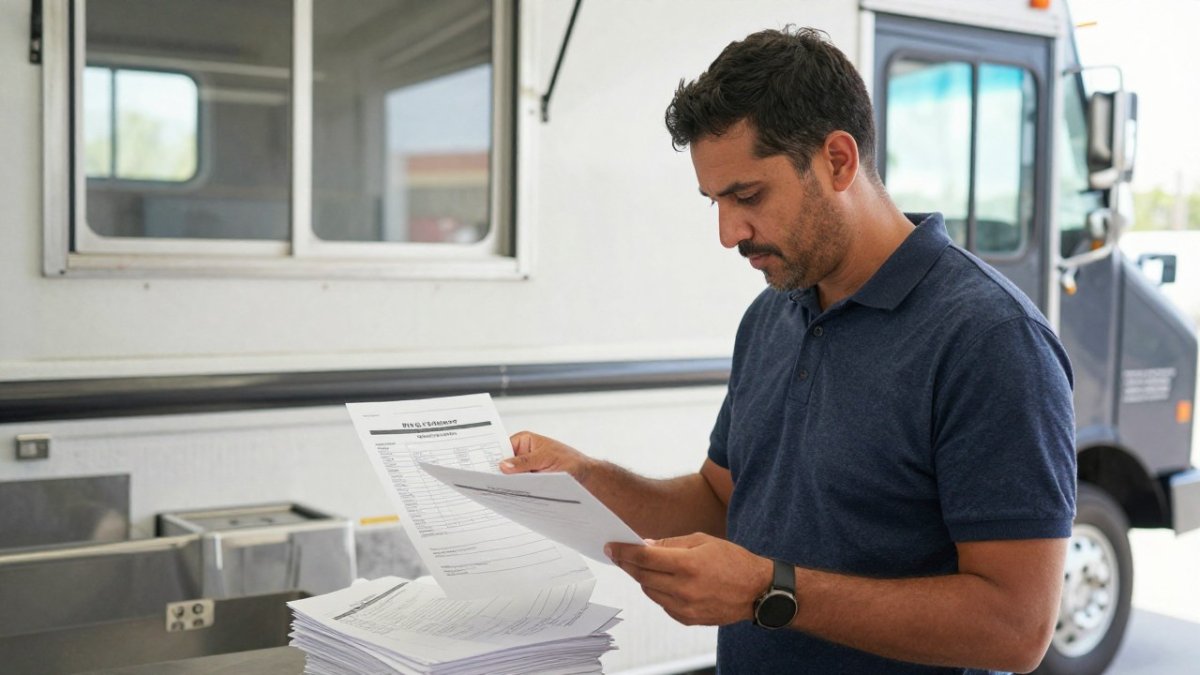
- Government-issued photo ID
- Business formation documents
- Vehicle title and registration
- Certificate of insurance
- Equipment list and layout drawing
- Menu with preparation details
- Commissary or base location agreement
Check each office’s website for exact forms, since requirements change.
Meet Food Truck Health Permit Requirements and Plan Your Timeline
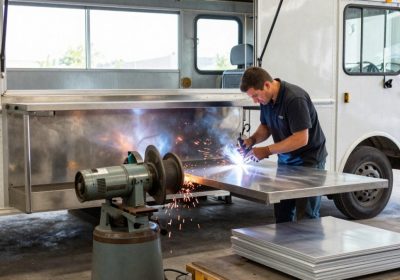
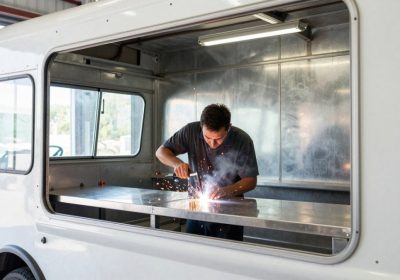
Health permits stall most launches because the plan review usually must happen before the truck is built or modified. The review checks hand sinks, a three-compartment sink, refrigeration, water tanks, ventilation, and food storage surfaces; building before approval can force costly rework.
- Register the business and get your EIN. Most agencies require a legal entity before accepting an application.
- Confirm jurisdiction and permit list. Ask each state, county, and city office for its current packet and plan review requirements.
- Submit the health department plan review. Provide layout drawings, equipment specs, and commissary details, often before construction.
- Build or modify the truck to the approved layout. Keep approved drawings on hand for inspection.
- Schedule the vehicle inspection. Some jurisdictions also require a fire marshal inspection.
- Apply for operating and business licenses. City vendor permits, zoning approvals, and the business license usually follow or run parallel.
- Confirm commissary and staff certifications. Ask whether food handler certification and a commissary agreement must be on file.
- Set renewal dates. Track each agency’s cycle separately so one lapse does not shut you down.
Processing times vary by agency and season, so ask each office for its current estimate and build a buffer into your launch date.
- Incomplete document packet: Missing commissary agreements, insurance certificates, or vehicle registration are the most frequent cause of rejection.
- Layout not matching the approved plan: Submit revisions before installing equipment.
- Failed inspection on water or ventilation: Confirm requirements during plan review, not at inspection.
- Missing local license: A passed health inspection does not replace a city vendor permit; apply in parallel.
- Expired insurance or registration: Keep certificates current, since agencies verify them at issuance and renewal.
Watch out: Treating the health permit as the only approval is a common mistake. The city vendor license, fire inspection, and commissary agreement can each independently block your opening date.
For a custom truck built to meet health-code layouts, see our mobile kitchen manufacturers and start that conversation early.
Frequently Asked Questions
How long does it take to get food truck permits?
Processing time varies widely by city, county and state, so there is no single answer. Some local offices issue mobile food permits within a few weeks once a complete application and fee are received, while others require plan review, a fire inspection and a health inspection that can stretch the process over several months. Ask your local health department for its current processing time, and submit a complete packet early to avoid delays. Incomplete applications are the most common reason permits slow down.
Do you need a separate permit for each location where your food truck operates?
In many jurisdictions, yes. A mobile food permit may only cover the cities or counties that issued it, and some areas require a separate operating permit or location approval for each event or commissary you use. Check whether your permit names specific operating locations, and confirm with each jurisdiction before you serve there. Keeping copies of your permits and your commissary agreement in the truck makes inspections faster.
Do food truck permits vary by state and city?
Yes. Food truck permits are generally issued at the state, county or city level, and requirements for licenses, health permits, fire inspections and vehicle approval differ from one place to the next. Some jurisdictions require a plan review before construction, while others focus on inspection after the truck is built. Start with your state health department and then contact your city and county offices to confirm every requirement that applies to where you plan to operate.