
Last Updated: November 17, 2026
Quick Summary
A mobile food business is a restaurant operation run from a food truck, trailer, or cart that moves to where customers are, avoiding the lease and build-out costs of a fixed kitchen. Success depends on a defined menu and target market, a specific business plan, and clearing state, county, and city permits before the first service.
- Keep your menu tight, usually five to eight items, so the cooking line runs fast and wastes less inventory.
- Map licensing across three layers: state, county, and city, since each can require its own application and inspection.
- Confirm the exact permit forms and fees directly with each regulator, because requirements vary by location and change over time.
- Calculate break-even by dividing fixed monthly costs by contribution margin per service, using conservative assumptions.
- Forecast cash flow by timing, since event fees and equipment payments can land in the same week.
Table of Contents
- Why a Mobile Food Business Makes Sense Right Now
- Choosing Your Concept, Menu, and Target Market
- Writing a Food Truck Business Plan That Holds Up
- Food Truck, Trailer, Cart, or Other Mobile Unit: Choosing the Format
- Startup Costs, Food Trailer Financing, and Budgeting
- Licenses, Permits, and the DBPR Food Truck Application
- Health Inspections, Food Safety, and Equipment Readiness
- Food Truck Profitability, Break-Even, and Cash Flow
- Your Next Step: Planning Your Launch in 2026
- Frequently Asked Questions
Why a Mobile Food Business Makes Sense Right Now
Starting a mobile food business in 2026 gives aspiring culinary entrepreneurs a way into the restaurant trade without the lease, build-out, and overhead of a brick-and-mortar kitchen.
The appeal is practical as much as financial. A mobile unit lets you validate demand before committing to a fixed location, and the same vehicle can serve festivals, office lunches, private events, and weekend markets.
Mobile food is regulated at the state, county, and city level in the United States, so requirements vary by location. Use the official resources of your state and local health department, such as the U.S. Food and Drug Administration Food Code, as a baseline, then confirm the specifics where you plan to operate.
Choosing Your Concept, Menu, and Target Market
Your concept determines almost every decision that follows, from the vehicle layout to the permits you need. A tight menu of five to eight items usually runs faster and wastes less inventory than a sprawling one, especially on a single cooking line.
Target market matters just as much. A lunch crowd near an office park wants fast, portable food they can eat in fifteen minutes. A weekend event crowd will wait longer for something more elaborate. Test your assumptions at a few events before you lock in the menu and the equipment list.
Watch out: a menu that looks good on paper can fail once you time it under service pressure. Run a timed trial with your planned prep and cooking steps before you buy the equipment that depends on it.
Writing a Food Truck Business Plan That Holds Up
A food truck business plan is the document that turns your idea into numbers a lender, insurer, or partner can evaluate. It should cover your concept, target customers, menu and pricing logic, operating schedule, staffing, the vehicle and equipment you need, and your launch timeline.
The financial section of the plan should be built around your real costs rather than estimates borrowed from another operator’s story. Map out your fixed costs, variable food costs, labor, fuel, insurance, permits, and the fees charged by the events and locations where you plan to sell.
The plan also needs a contingency section. Describe what you will do if a key event cancels, your generator fails, or a permit renewal is delayed.
Food Truck, Trailer, Cart, or Other Mobile Unit: Choosing the Format
The format you choose shapes your capacity, mobility, and upfront cost. A food truck is a self-propelled vehicle with a built-in kitchen. It is the most visible option and can drive to the location itself, but it requires a vehicle that must be maintained, insured, and licensed as a motor vehicle.
Beyond the vehicle itself, consider other mobile formats such as pop-up kiosks, event trailers, and catering-only mobile units. Each has different permitting paths and different revenue patterns, so the right choice depends on the business model you actually want to run.
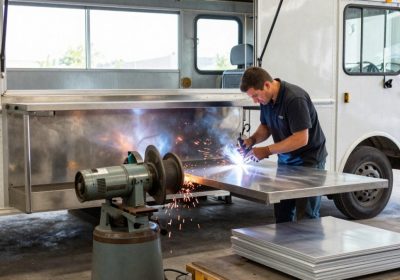
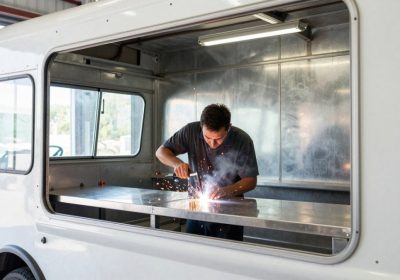
Titan Trucks Mfg works with operators on custom food trucks and trailers, and can help you match the build to your menu and service style. Our layout planning covers equipment placement and guidance on health codes and permits.
Startup Costs, Food Trailer Financing, and Budgeting
Startup costs for a mobile food business vary widely with the format, the equipment, the vehicle condition, and the local permit fees. Browse our food trucks and trailers to see the range of mobile units we build.
Plan for costs beyond the build itself. Permits, insurance, commissary kitchen fees, initial inventory, marketing, and working capital for the first months of slower sales all belong in the budget. Many new operators underestimate the working capital they need, which is why a conservative cash reserve matters.
Financing options for a food trailer or truck can include equipment loans and personal or business savings. Our step-by-step guide to financing a food trailer walks through how each option works. Speak with a lender or financial advisor about which structure fits your situation.
Licenses, Permits, and the DBPR Food Truck Application
Licensing is where many mobile food plans stall, and the reason is structural: there is no single national mobile food license. Follow our step-by-step walkthrough for getting food truck permits to organize the process.
Layer one: the state. Most states regulate mobile food through a health or agriculture department, a restaurant-and-lodging division, or a dedicated mobile food unit program. Because the agency and application can vary by vehicle type, operators planning a mobile coffee service should confirm which rules apply to their setup before choosing equipment or routes, a consideration that also shapes the work of Colada Kulture Co.
Layer two: the county. County health departments frequently conduct the actual plan review and inspection even when the state issues the license. Some counties require a separate mobile food permit, a commissary agreement on file, and a pre-operational inspection before the unit can serve its first customer.
Layer three: the city or town. Municipal rules govern where you can vend, whether you need a peddler’s or itinerant vendor license, how close you can park to an existing restaurant, and what hours you may operate.
Permit Decision Tree: Which Approvals Apply to You
Work through these questions in order to map your likely approvals:
- Will the unit be self-propelled or towed? Each has different vehicle and registration requirements, and some states license them under different programs.
- Will you prepare food on board, or only reheat or assemble food brought from elsewhere? On-board preparation usually triggers full health plan review; limited-menu units sometimes qualify for a simplified process.
- Will you operate only at events, or on public streets and private lots? Street vending often adds city-level vendor licensing and parking restrictions that event-only operators never encounter.
- Do you have a commissary kitchen or other approved base of operations? Many jurisdictions require one for servicing, storage, and water, and some require a written commissary agreement before plan review.
- Do you plan to operate in more than one county or state? Each jurisdiction may require its own permit, its own inspection, and its own fee.
How to Find Your Actual Regulator
Rather than guessing, use this sequence.
Keep a written log of every agency you contact, the name of the person you speak with, the date, and what they told you.
Watch out: a permit issued by one agency does not satisfy another. Operators routinely assume a state license covers city vending rules and discover the gap only after a citation.
Confirm the current form, fee schedule, and submission method directly with each regulator, since these change over time. Use the official state and county health department licensing pages to verify each requirement for your location before you buy a vehicle.
Health Inspections, Food Safety, and Equipment Readiness
Health inspectors evaluate the unit against food safety rules that cover temperatures, handwashing, water supply, waste handling, and sanitation. Review the standards in the FDA Food Code and your local rules before the inspection. Our complete guide to food truck layout, equipment and health codes covers what inspectors look for in each area.
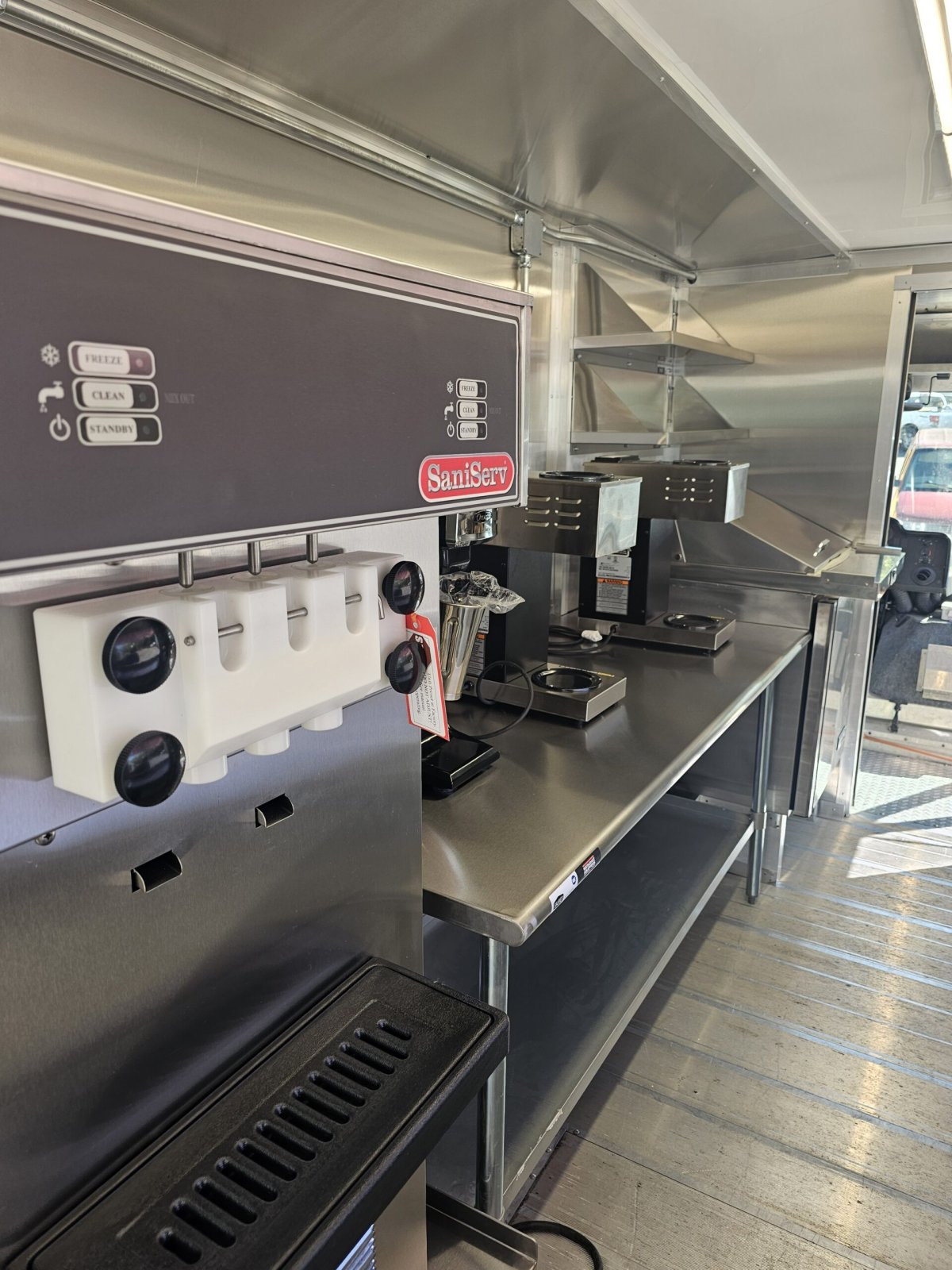
Equipment readiness should be checked before the inspector arrives. Confirm that refrigeration holds temperature, the hand sink is stocked and functioning, the water tanks and waste tanks are sized correctly for your operation, and the fire suppression and cooking equipment are installed as the plan review requires. A well-laid-out kitchen simplifies both the inspection and daily service.
Titan Trucks Mfg offers guidance on layout and health code requirements, but the final approval rests with your local health department.
Food Truck Profitability, Break-Even, and Cash Flow
Profitability for a mobile food business comes down to three levers: how many services you can work, what each service earns, and what each one costs. The useful version is the arithmetic behind it, because the math tells you whether your concept can survive before you spend on a build.
The Break-Even Formula, Worked Through
Break-even volume is your fixed monthly costs divided by your contribution margin per service. Contribution margin is revenue from a service minus the variable costs of that service, food, packaging, and any per-event fee that scales with attendance.
Build the calculation in this order:
- Fixed monthly costs. Loan or lease payments, insurance premiums, commissary rent, vehicle registration and maintenance reserve, software, and any storage or parking you pay for whether you sell or not.
- Variable cost per service. Food cost, packaging, fuel for that service, and event or location fees charged per shift.
- Average revenue per service. Average ticket multiplied by the number of transactions you realistically expect in a service window.
- Contribution margin per service. Average revenue minus variable cost.
- Break-even services per month. Fixed monthly costs divided by contribution margin per service.
Run the numbers with conservative assumptions first. If your break-even requires more services per month than you can physically work, accounting for prep days, maintenance, and rest, the concept needs a higher average ticket, a lower food cost, or a lower fixed-cost base before it is viable.
The Metrics That Drive the Margin
Four numbers explain most of the variance between a profitable truck and a struggling one:
- Food cost percentage. Track it per menu item, not just overall, because one low-margin item can drag the whole menu down.
- Average ticket size. Small changes here move contribution margin faster than almost any other lever, which is why combo and add-on structure matters.
- Transactions per service. This is a function of location, day, and weather as much as food quality.
- Cost per event or location. A high-volume event with a steep fee can be less profitable than a modest lunch stop with no fee.
Review these weekly during the first year. A monthly review is too slow to catch a menu item that is quietly losing money.
Cash Flow: The Timing Problem
Cash flow often matters more than profit in the early months, and the reason is timing rather than totals.
Build a monthly cash flow forecast that shows the timing of money in and out, not just the totals. Include a line for a maintenance reserve, because a refrigeration failure during a busy week is both a repair bill and lost revenue.
Watch out: a profitable month on paper can still leave you short of cash if a large event fee and an equipment payment land in the same week. Forecast the timing, not just the margin.
Adjust your menu, pricing, and schedule based on these numbers rather than on intuition, and revisit the assumptions in your business plan whenever a major cost changes.
Your Next Step: Planning Your Launch in 2026
Launching a mobile food business in 2026 is a sequence of decisions: choose the concept and format, write a plan you can defend, confirm the permits for your jurisdiction, and build or outfit a unit that passes inspection and fits your menu. Each step makes the next one easier, and skipping one tends to cost time and money later.
Titan Trucks Mfg can help you through the build side of that sequence, with custom design, fabrication, assistance with permits and paperwork, and two years of free consulting included with every build. Our team can walk you through layout, equipment, and health code guidance.
Ready to plan your build? Get A Free Quote from Titan Trucks Mfg and start turning your concept into a working mobile kitchen.
Frequently Asked Questions
Are food trucks profitable in 2026?
Profitability depends on your concept, location choices, event schedule, food cost control, and how efficiently you run each service. Many operators find that lower overhead than a brick-and-mortar restaurant helps protect margins, but that advantage only holds if you track daily sales, labor, and food waste closely. Build a break-even estimate before you buy equipment, and revisit it monthly during your first year. For specific projections tied to your market, a business advisor or accountant familiar with mobile food can help you model your numbers.
What are the requirements for a mobile food permit in Florida?
Mobile food operations are licensed by the state and local agencies that govern food establishments, and local health department requirements may also apply. Expect to provide business information, a description of your unit and menu, and proof of required inspections or approvals before operating. Requirements can vary by county and city, so confirm the specific application process and documentation with DBPR and your local jurisdiction before purchasing a unit or signing a lease.
What licenses and permits do you need to start a mobile food business?
Most mobile food businesses need a state or county food establishment license, a health permit, a business registration or local vendor license, and a sales tax registration. Many jurisdictions also require fire safety inspections for cooking equipment and approval of a commissary or other approved food preparation location. Because the rules differ by state and locality, start by listing the agencies that govern your unit type and service area, then request written requirements from each before you finalize your menu or buy equipment.
How do you create a business plan for a food truck?
A solid food truck business plan covers your concept and target market, a menu with pricing and food costs, a startup budget, a financing strategy, an operating plan that covers locations and events, and a marketing approach. Include a realistic sales forecast based on the number of service days and average ticket size, and show how that forecast covers fixed and variable costs. Lenders and partners will look for clear assumptions, so note where each number came from and review the plan at least twice a year.
How do you choose between a food truck and a food trailer?
A food truck combines the vehicle and kitchen, which makes it easier to move between vending locations but usually costs more to buy and maintain. A food trailer requires a towing vehicle, but it can offer more kitchen space for the price and is often easier to customize. Consider your menu complexity, how often you plan to move, your towing capability, and local rules on where and how each unit can operate. Your choice affects permitting, insurance, and financing, so decide on the format before you finalize your plan.
How do you find locations and events for a mobile food business?
Start with locations that have steady foot traffic, such as office districts, breweries, farmers markets, and community events, and check local rules on where mobile food vending is allowed. Many operators build relationships with event organizers and property managers, and they track which spots generate the best sales per service hour. Keep a schedule of recurring events and confirm vending permissions in writing before each booking. Reviewing sales data by location every month helps you drop weak spots and add stronger ones.
Can you sell food at an event without a license?
Generally, no. Most event organizers and local jurisdictions require vendors to hold the applicable food license, a temporary event permit, or both, even for one-day events. Selling without the right approvals can lead to fines, forced closure, or removal from the event. Ask the event organizer what documentation they require, and confirm with the local health department whether a temporary or special event permit is needed for your menu and cooking method.
Are mobile food trucks profitable?
Mobile food trucks can be profitable when operators control food costs, choose locations that match their menu and customers, and manage labor and fuel expenses carefully. Profitability tends to be stronger for concepts with simple menus, high-margin items, and a consistent event or location calendar. Track your average sales per service day, cost of goods sold, and total operating expenses so you can see where margin is being lost. The break-even point is the most useful number to know before launch, since it shows how many sales you need to cover your fixed costs.